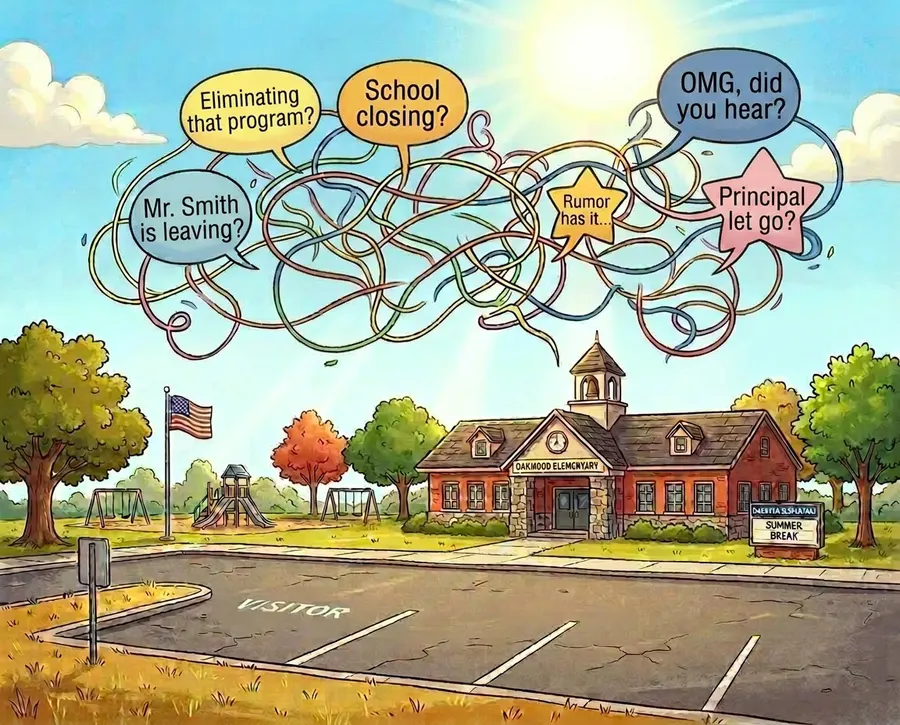

It's Sunday night. You're finishing the dishes when your phone buzzes with a screenshot from a parent. Someone online has posted a list of local schools, yours included, with a vague warning about Monday. Within an hour there are three more messages, and a neighborhood Facebook group is already debating whether to keep kids home.
This fall, that scene is playing out in districts across the country. In late August, school districts in southeast Georgia warned families about a social media trend they believed had started in another state and then been edited to name local schools. One district said it learned of the trend late and apologized to families for the delay in notifying them. Just last week, Howard County schools in Maryland confirmed that threats circulating on social media had targeted several schools and said they were working with police to investigate.
Most of these threats turn out to be hoaxes. Your community doesn't know that yet, though, and neither do you in the first hour. That gap is where the communications work happens.
Your first instinct may be to wait until you have the full picture. Resist it. Silence doesn't stop the conversation; it just means someone else gets to lead it. A short, early message that says what you know, what you're doing about it, and when families will hear from you next buys you credibility. It also lets you take your time on everything else.
At the same time, be careful not to become the threat's best distributor. The FBI has specifically cautioned against reposting threatening content, because that can heighten fear, extend the original poster's reach, and encourage copycats. So describe the threat in general terms and never share the screenshot. Then ask families to do the same: save anything they see, report it to police or the school, and don't pass it along.
Pay attention to your tone as well. Calling a threat "not credible" may well be accurate, but on its own it can sound dismissive to a frightened parent. Howard County struck a better balance, saying the threats didn't appear credible while still treating them with the utmost seriousness and working alongside local and federal law enforcement. That combination of calm and seriousness is what families need to hear.
Don't overlook your students. They usually see these posts first, and they are often the ones who tip off adults. When students report something, thank them publicly. It reinforces the behavior you want the next time.
Finally, close the loop. Families will remember whether you came back to tell them how it ended, whether that's an arrest, a resolved investigation, or a simple "school proceeded normally today." A follow-up message turns a scary night into proof that your system works.
The best time to write those messages isn't Sunday night. Draft templates now, agree on roles with your law enforcement partners, and decide who approves what. Hoax threats are designed to create chaos. A prepared leader doesn't give them any.