
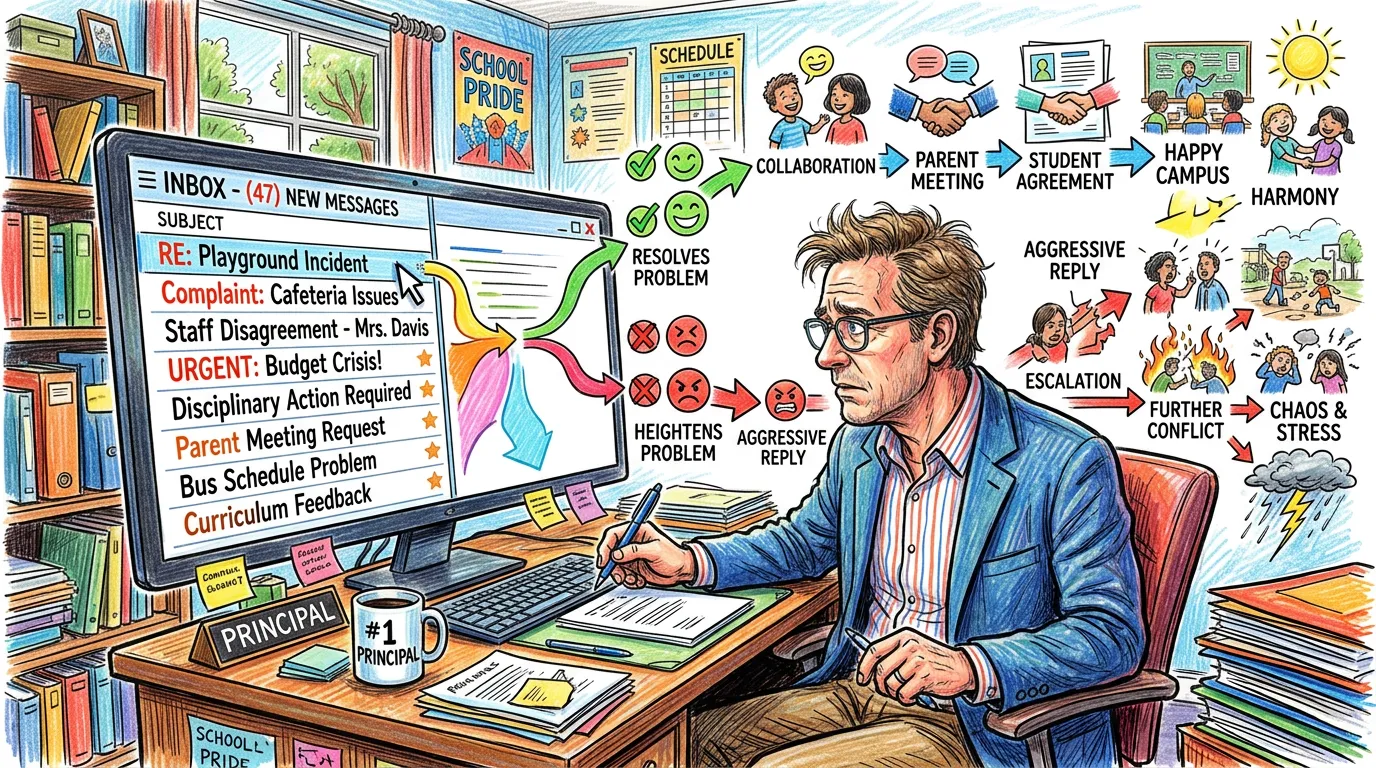
Every school leader knows the feeling: You open your inbox and there it is—a frustrated parent, an angry staff member, or someone demanding an explanation for a decision they don’t understand. It is tempting to see these messages as individual problems to solve.
But a principal’s inbox is more than a collection of complaints and questions.
It is one of the most important communications channels a school has.
Consider what happens when a parent sends an angry email about a teacher, a schedule change, transportation, discipline or a school policy. The response can either calm the situation or make it worse. And that response may not stay between the parent and the principal. It can be forwarded to other parents, shared in a group chat, posted on social media or eventually shown to a reporter. That’s why every school leader should assume that any written communication could someday have a much larger audience.
That doesn’t mean writing every email like a press release. It means remembering that how you respond can become part of your school’s reputation.
One of the biggest mistakes leaders make is responding too quickly. When an email makes you angry, defensive or frustrated, the natural reaction is to fire back. But the parent isn’t necessarily looking for an argument. Often, they’re looking for three things: to be heard, to understand what happened and to know what will happen next.
A better response begins with acknowledgment. “I understand why this situation is frustrating, and I appreciate you bringing it to my attention.” That doesn’t mean you’re agreeing with the parent. It simply demonstrates that you heard them.
Then explain what you can. If you don’t have enough information, say so. “I want to make sure I have the facts before I respond” is far better than guessing, becoming defensive or providing an incomplete answer.
And remember: you don’t have to win the email. Sometimes the best communication is moving the conversation offline. A phone call or face-to-face meeting can prevent five increasingly frustrated emails from becoming a battle of words.
There’s another important reason to think strategically about the inbox: patterns matter. If the same question is arriving from five parents, you may not have five communication problems. You may have one communication problem that you’re addressing five times. That’s a signal that the school needs to communicate more broadly.
Maybe parents don’t understand a new attendance policy. Maybe families are confused about the cell-phone rules. Maybe a change to transportation wasn’t adequately explained. Your inbox can become an early-warning system.
So before you hit “send,” ask yourself three questions:
- Am I answering the question?
- Am I escalating the emotion?
- Would I be comfortable if this email were forwarded to 500 people?
That last question is particularly important.
Because your inbox isn’t just where you answer emails. It’s where you build—or lose—trust, one message at a time.