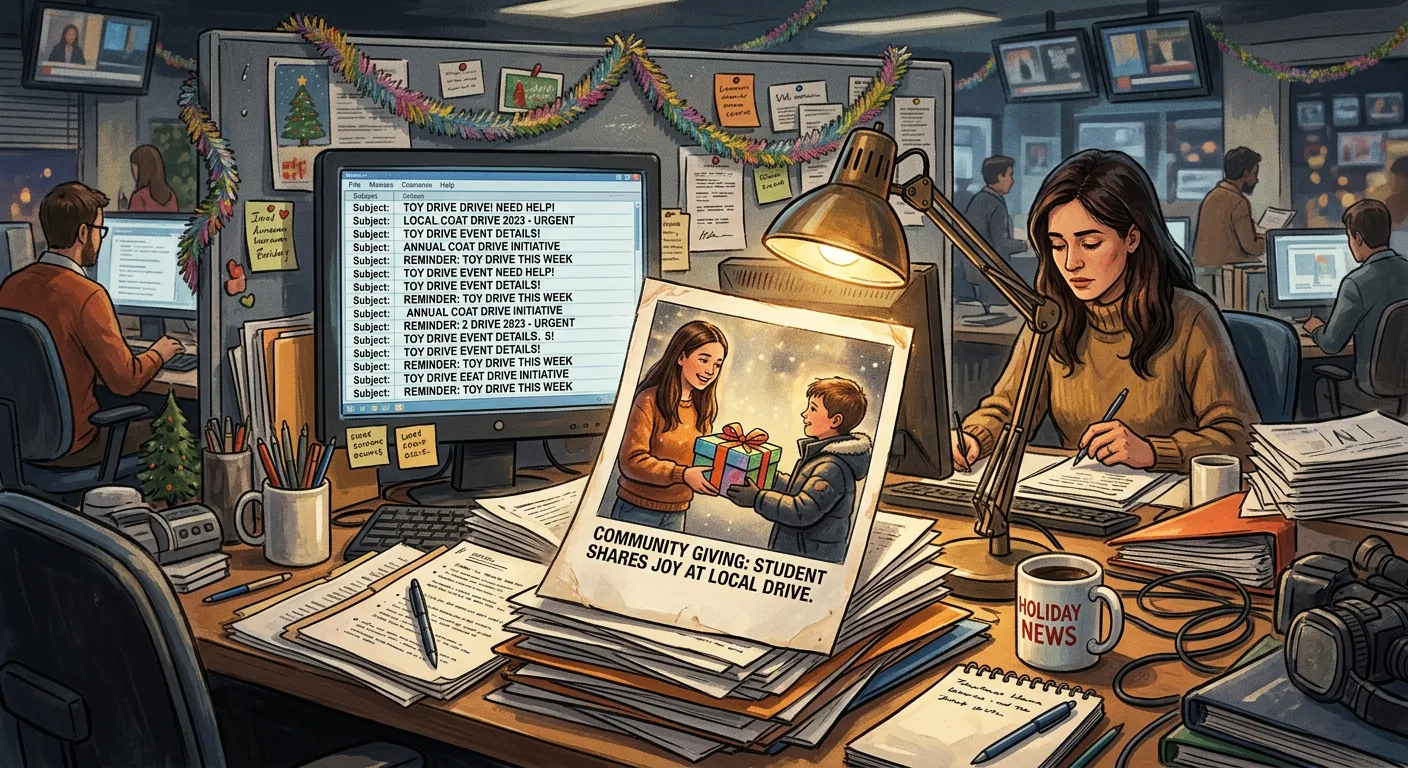
In my years working in TV newsrooms, December brought a steady flood of holiday pitches: toy and coat drives, meals for the hungry, canned-goods competitions and cookies for first responders. Nearly every one came from good people doing good things. Most never made it on the air.
That wasn't because newsrooms didn't want holiday stories. They did, and they still do. Audiences love goodwill in December, and stations look for stories that leave viewers feeling better about their communities. The problem is math. Holiday weeks mean thinner staffs, and the crews who are working are often spoken for by news that can't wait: the fire, the crash, the council vote. A feature gets a crew only if it's easy to cover and hard to pass up. And your school is competing with every other school, nonprofit and congregation in the market pitching the same coat drive.
So the question isn't whether your school is doing something good. It almost certainly is. The question is whether you can pitch the hook that gets attention.
Usually, that "hook" is a person. "Our high school is collecting toys" is a program. "A sophomore who spent two Christmases in a shelter is now leading the district's toy drive" is a story, provided the student and family are comfortable sharing that experience. Editors say yes to people, not programs.
It also helps to have a moment. A pile of donated coats is a still picture. Kindergartners struggling to carry coats twice their size onto a bus is something people want to watch. So are unexpected acts of generosity: students who were once on the receiving end now helping others, or a retired teacher who has shown up every December for 30 years.
Can't get a reporter there? Capture that moment yourself. Much of what airs on local news today, and even makes its way to network broadcasts, starts with video shot on someone's phone. When an editor opens your email and watches 8 seconds of a custodian opening a card and learning that staff members raised money to fly her home for Christmas, the pitch practically sells itself. That video might air on its own or bring a news crew out for a follow-up.
A few basics matter: shoot on your phone horizontally (landscape style), hold the camera steady, get close enough to hear the reaction and make sure you have permission from everyone involved, especially the families of students. Don't stage the moment or ask someone to repeat a genuine reaction. Authenticity is what makes the video work.
Then make it easy for a newsroom to say yes. Describe the central hook in the subject line: "A custodian brought to tears, caught on camera!" Include the when and where, who's available to talk, and attach the video if it already happened. Follow up the day before the event and again that morning. The person working the assignment desk may not have seen your original pitch.
If television passes, the local newspaper, community news sites and your own district channels are still options. A story that doesn't make the evening news can still make a meaningful impression on your school community.
The schools that earn holiday coverage year after year aren't necessarily doing more good than anyone else. They're just better at finding the one gold nugget inside all that good and presenting it in a way a busy newsroom can't pass up.