All Thoughts

Communications Strategy & Planning

AI — When Your School Says No, Be Ready to Explain Why

AI — When Your School Says No, Be Ready to Explain Why

Artificial intelligence is creating a new challenge for school leaders, and it isn’t simply deciding whether students should be allowed to use it. The bigger challenge may be explaining the decision.

Across the country, schools are taking very different approaches to AI, particularly as it relates to our youngest students. Some districts are prohibiting generative AI in elementary grades, while some educators argue that keeping children away from the technology may leave them unprepared for a world in which AI will be everywhere.

That disagreement creates an important leadership lesson: reasonable people can look at the same issue and reach different conclusions. If your district decides to restrict or prohibit AI use in elementary school, don’t assume the policy speaks for itself. Teachers need to understand more than what the rule says. They need to understand why the district made the decision, what exactly is prohibited, what exceptions exist, and how they should respond when students or parents challenge the policy. Most importantly, teachers shouldn’t be hearing the district’s reasoning for the first time when a parent asks them about it.

Then there are the parents—and they won’t all agree. Some will applaud the decision, believing young children shouldn’t be using AI. Others may argue that schools have a responsibility to teach children how to use AI safely and responsibly because they encounter it elsewhere. Neither perspective should be dismissed. 

That’s why school leaders should avoid communicating an AI policy as an “AI is bad” message. Instead, explain the educational reasoning behind the decision. Perhaps the message is: We believe our youngest students need to develop strong foundational skills in reading, writing, problem-solving and human interaction before using generative AI as a learning tool.

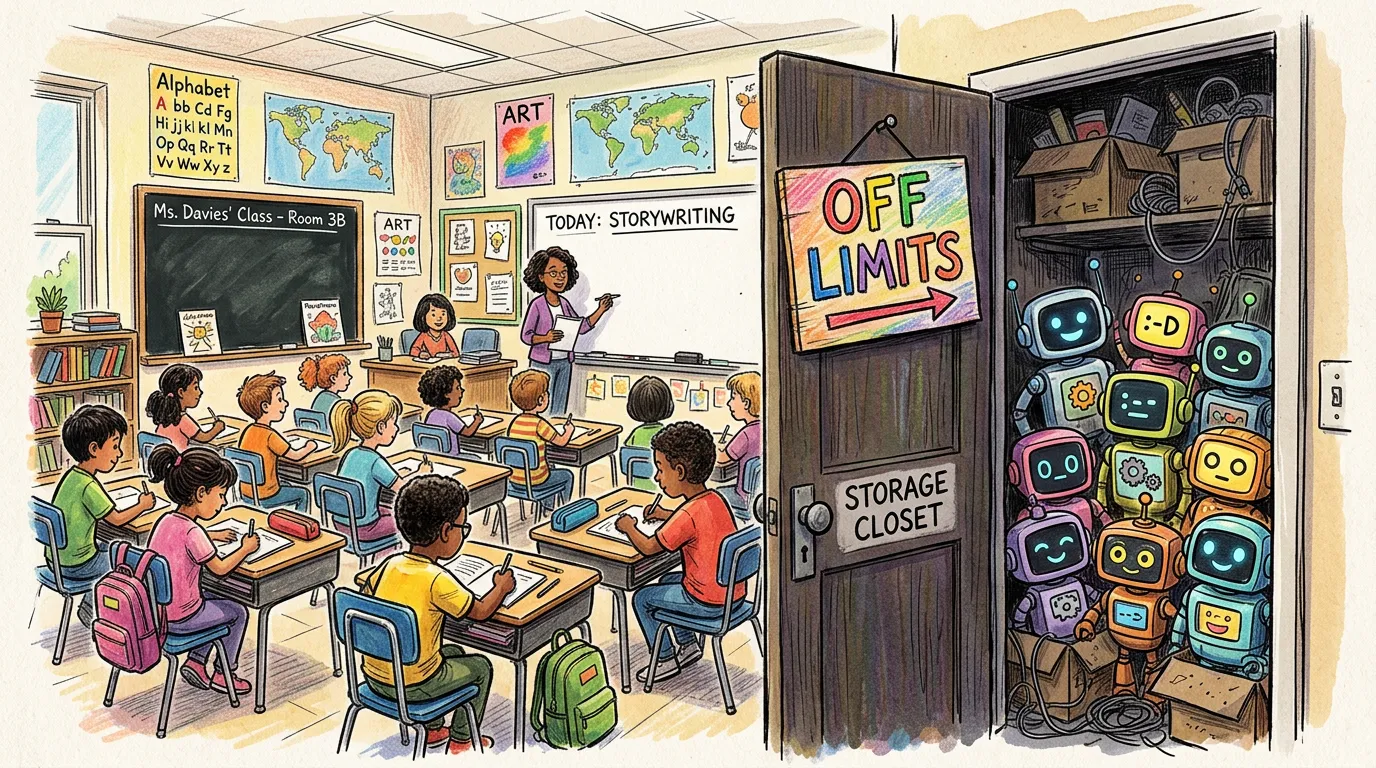
Then explain what the school will do. For example, a district might restrict student use of AI while still teaching students about artificial intelligence—how it works, why it can be wrong, how to recognize misinformation, why privacy matters and why human judgment is essential.

That’s an important distinction: you can teach AI literacy without giving every elementary student an AI chatbot.

And don’t make the policy sound permanent. AI is changing too quickly for schools to pretend they have every answer. Tell teachers and parents when the policy will be reviewed and what information will help determine whether it should change. The communication order matters, too. Equip principals with consistent answers. Educate teachers. Then communicate with parents in plain language, and give them a place to ask questions.

Most importantly, explain the thinking behind the decision. Because parents and teachers may disagree with a policy. That’s part of leadership. But they are much more likely to trust a decision when they believe their school leaders have listened, considered the evidence, explained their reasoning and remain willing to reconsider as circumstances change.

Keep Reading

Your Inbox As a Communications Strategy

Your Inbox As a Communications Strategy

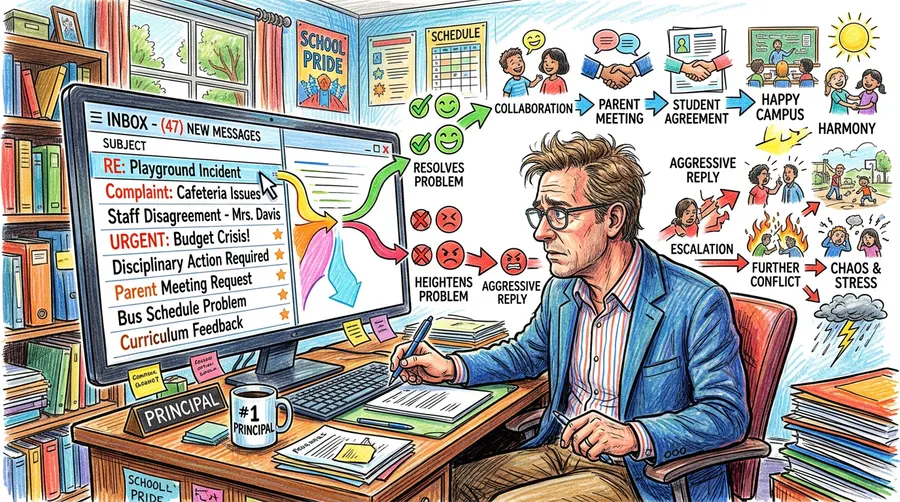
Every school leader knows the feeling: You open your inbox and there it is—a frustrated parent, an angry staff member, or someone demanding an explanation for a decision they don’t understand. It is tempting to…

Read
No Communications Office? Do These 5 Things

No Communications Office? Do These 5 Things

The school year is underway. Teachers are back, students are settling into their routines, and school leaders are already juggling more priorities than they probably care to count. Communications is one of them. The reality…

Read
Starting Fresh When Last Year Didn’t End Well

Starting Fresh When Last Year Didn’t End Well

Some districts get to start the year with a clean slate. Others don’t. Maybe it was a leadership shakeup that played out in the local news. Maybe it was a safety incident, a budget fight…

Read